

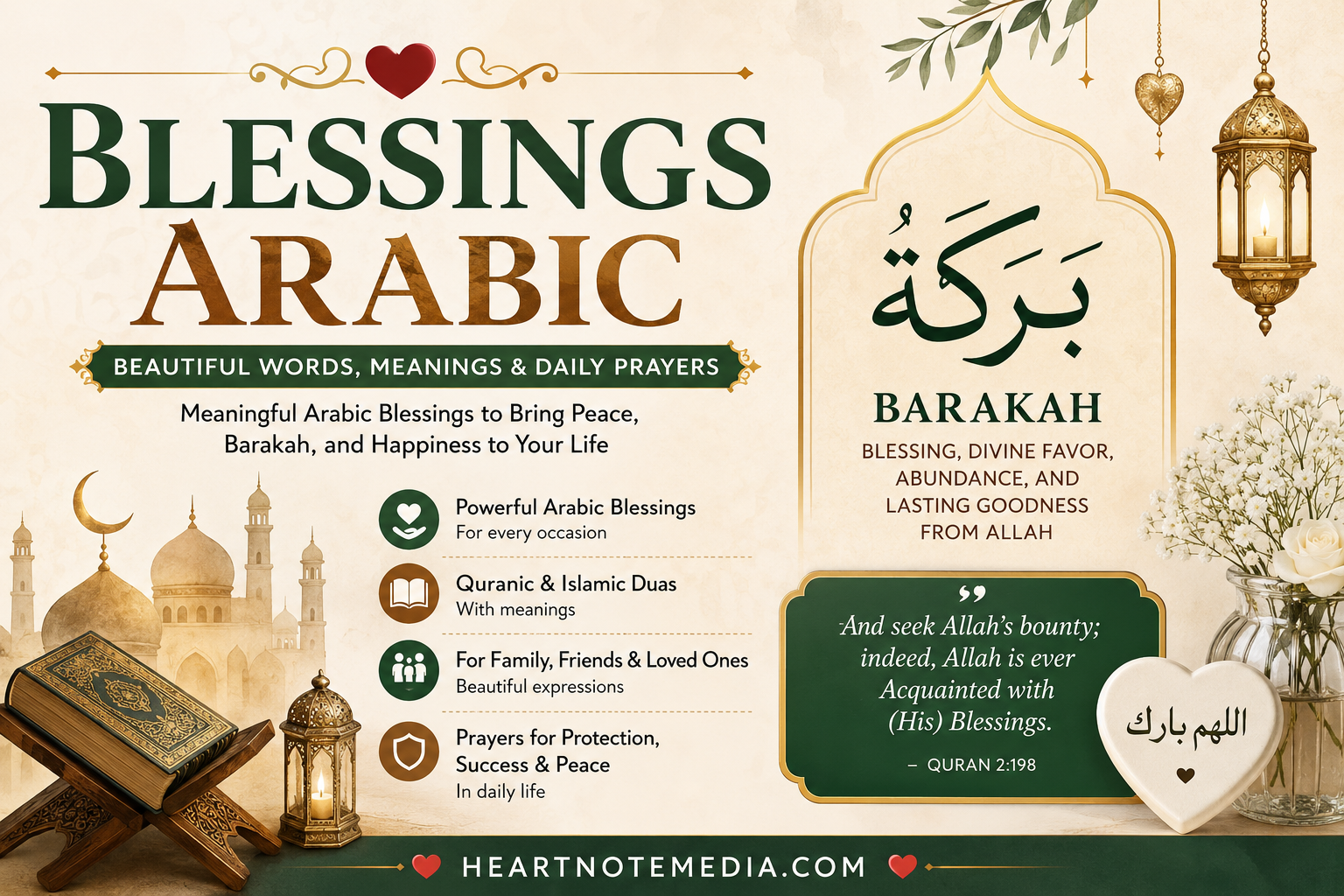
Blessings Arabic phrases are deeply rooted in faith, kindness, and everyday communication. From wishing someone success to asking Allah for mercy and protection, Arabic blessings carry spiritual meaning that goes beyond ordinary greetings. Whether you’re learning Arabic, exploring Islamic expressions, or looking for meaningful blessing phrases to share, this guide provides authentic translations, pronunciation, practical usage, and cultural context in one place.
Unlike many basic vocabulary lists, this article explains not only what each phrase means but also when native Arabic speakers and Muslims commonly use it. By the end, you’ll understand the most popular Arabic blessings, their meanings, and how to use them naturally in daily life.
What Does Blessing Mean in Arabic?
The most common Arabic word for blessing is Barakah (بَرَكَة). It refers to divine blessings, abundance, prosperity, spiritual goodness, and lasting benefit that comes from Allah.
A blessing in Arabic is more than material wealth. It can include good health, peace of mind, strong relationships, knowledge, time, faith, and protection. Muslims often pray for Barakah because it represents goodness that continues to grow and positively affects every part of life.
Quick Definition
- Arabic Word: بَرَكَة (Barakah)
- Pronunciation: Ba-ra-kah
- Meaning: Blessing, divine favor, abundance, prosperity, lasting goodness
- Used In: Daily conversations, prayers, Quranic verses, Islamic greetings, weddings, business, family life, and celebrations
Why Arabic Blessings Are So Meaningful
Arabic blessings are not simply polite expressions. They are heartfelt prayers asking Allah to grant goodness, mercy, protection, and success. Many of these phrases originate from the Quran and the Sunnah, making them spiritually significant for millions of Muslims around the world.
People use Arabic blessings to celebrate joyful moments, comfort others during difficult times, encourage loved ones, and express gratitude. These expressions strengthen relationships while reminding people to place their trust in Allah.
Common Blessings Arabic Phrases
These are among the most widely used Arabic blessing phrases. They are appropriate for everyday conversations and special occasions.
1. بارك الله فيك
Transliteration: Barakallahu Feek
Meaning: May Allah bless you.
Best Used: Thanking someone, appreciating kindness, or offering a heartfelt blessing.
2. بارك الله فيكم
Transliteration: Barakallahu Feekum
Meaning: May Allah bless all of you.
Best Used: Addressing a family, group, or community.
3. اللهم بارك
Transliteration: Allahumma Barik
Meaning: O Allah, bless it.
Best Used: When admiring someone’s success, home, child, or achievement without causing envy.
4. تبارك الله
Transliteration: Tabarak Allah
Meaning: Blessed is Allah.
Best Used: Expressing amazement at Allah’s creation or recognizing His greatness.
5. جزاك الله خيرًا
Transliteration: JazakAllahu Khairan
Meaning: May Allah reward you with goodness.
Best Used: Thanking someone sincerely.
6. حفظك الله
Transliteration: Hafizak Allah
Meaning: May Allah protect you.
Best Used: Before someone travels, begins work, or faces challenges.
7. وفقك الله
Transliteration: Waffaqak Allah
Meaning: May Allah grant you success.
Best Used: Exams, interviews, business, or new opportunities.
8. رزقك الله
Transliteration: Razaqak Allah
Meaning: May Allah provide for you.
Best Used: Financial encouragement and prayers for livelihood.
9. رحمك الله
Transliteration: Rahimak Allah
Meaning: May Allah have mercy on you.
Best Used: Traditionally after someone sneezes or when praying for mercy.
10. أنعم الله عليك
Transliteration: An’am Allah Alayk
Meaning: May Allah bless you with His favors.
Best Used: Expressing warm wishes for continued happiness and prosperity.
God Bless You in Arabic
There are several ways to say God bless you in Arabic depending on the situation. Each carries a slightly different meaning and level of formality.
| Arabic | Transliteration | English Meaning | Common Usage |
| بارك الله فيك | Barakallahu Feek | May Allah bless you | Everyday blessing |
| اللهم بارك | Allahumma Barik | O Allah, bless | Admiring blessings |
| حفظك الله | Hafizak Allah | May Allah protect you | Travel and safety |
| وفقك الله | Waffaqak Allah | May Allah grant success | Exams and work |
| رزقك الله | Razaqak Allah | May Allah provide for you | Financial blessings |
| رحمك الله | Rahimak Allah | May Allah have mercy on you | After sneezing or prayer |
When Do People Use Arabic Blessings?
Arabic blessing phrases naturally fit into everyday life. They are spoken with sincerity and often replace simple expressions like “good luck” or “take care.”
People commonly use them during:
- Weddings and engagements
- Birth of a baby
- Graduation ceremonies
- Job interviews
- Business openings
- Travel departures
- Family gatherings
- Religious celebrations
- Ramadan and Eid
- Daily conversations with friends and relatives
Why Learning Arabic Blessings Matters
Learning Arabic blessings helps you understand Islamic culture, communicate respectfully with Arabic speakers, and appreciate the spiritual depth behind these timeless expressions. Even beginners can start using simple phrases that spread kindness, gratitude, and positivity in everyday life.
Arabic Blessings for Family
Family is highly valued in Islam and Arab culture. These blessings ask Allah to protect, guide, and fill loved ones with peace, health, and happiness.
1. اللهم احفظ عائلتي
Transliteration: Allahumma Ihfaz A’ilati
Meaning: O Allah, protect my family.
2. بارك الله في أسرتكم
Transliteration: Barakallahu Fi Usratikum
Meaning: May Allah bless your family.
3. اللهم اجعل بيتنا مباركًا
Transliteration: Allahumma Aj’al Baytana Mubarakan
Meaning: O Allah, make our home blessed.
4. اللهم ارزق أهلي الصحة والسعادة
Transliteration: Allahumma Arzuq Ahli As-Sihhah Was-Sa’adah
Meaning: O Allah, grant my family health and happiness.
5. اللهم اجمع قلوبنا على الخير
Transliteration: Allahumma Ajma’ Qulubana Ala Al-Khayr
Meaning: O Allah, unite our hearts in goodness.
6. اللهم احفظ أولادي
Transliteration: Allahumma Ihfaz Awladi
Meaning: O Allah, protect my children.
7. بارك الله في والدَيّ
Transliteration: Barakallahu Fi Walidayya
Meaning: May Allah bless my parents.
8. اللهم أنزل البركة في بيتنا
Transliteration: Allahumma Anzil Al-Barakah Fi Baytina
Meaning: O Allah, send blessings into our home.
9. اللهم اجعل أهلنا من السعداء
Transliteration: Allahumma Aj’al Ahlana Mina As-Su’ada
Meaning: O Allah, make our family among the happy.
10. اللهم احفظنا جميعًا
Transliteration: Allahumma Ihfazna Jami’an
Meaning: O Allah, protect us all.
Arabic Blessings for Friends
True friendship deserves sincere prayers. These Arabic blessings express appreciation, encouragement, and love.
1. بارك الله في صداقتك
Meaning: May Allah bless your friendship.
2. وفقك الله في كل خطوة
Meaning: May Allah grant you success in every step.
3. حفظك الله أينما كنت
Meaning: May Allah protect you wherever you are.
4. رزقك الله الخير كله
Meaning: May Allah bless you with every goodness.
5. أسعدك الله دائمًا
Meaning: May Allah keep you happy always.
6. أنار الله طريقك
Meaning: May Allah illuminate your path.
7. جعل الله أيامك مباركة
Meaning: May Allah make your days blessed.
8. كتب الله لك الخير
Meaning: May Allah write goodness for you.
9. بارك الله في عمرك
Meaning: May Allah bless your life.
10. وفقك الله لما يحب ويرضى
Meaning: May Allah guide you to what pleases Him.
Arabic Blessings for Success
Whether starting a new job, taking an exam, or launching a business, these blessings ask Allah for success and guidance.
1. وفقك الله
May Allah grant you success.
2. اللهم يسر أمورك
May Allah make your affairs easy.
3. فتح الله لك أبواب الخير
May Allah open the doors of goodness for you.
4. بارك الله في عملك
May Allah bless your work.
5. رزقك الله النجاح
May Allah grant you success.
6. أعانك الله
May Allah help you.
7. جعل الله التوفيق حليفك
May Allah make success your companion.
8. اللهم اجعل النجاح نصيبك
May Allah make success your destiny.
9. أكرمك الله بالخير
May Allah honor you with goodness.
10. جعل الله مستقبلك مشرقًا
May Allah make your future bright.
Morning Blessings in Arabic
Morning blessings begin the day with gratitude, hope, and trust in Allah.
1. صباح الخير
Good morning.
2. صباح النور
Morning of light.
3. صباح مبارك
Blessed morning.
4. أسعد الله صباحك
May Allah make your morning joyful.
5. صباح مليء بالبركة
A morning full of blessings.
6. اللهم بارك هذا اليوم
O Allah, bless this day.
7. جعل الله يومك خيرًا
May Allah make your day good.
8. رزقك الله يومًا سعيدًا
May Allah grant you a happy day.
9. صباح الرحمة
Morning of mercy.
10. صباح مليء بالسلام
A morning filled with peace.
Evening Blessings in Arabic
These phrases are perfect for ending the day with comfort, peace, and remembrance of Allah.
1. مساء الخير
Good evening.
2. مساء مبارك
Blessed evening.
3. أسعد الله مساءك
May Allah make your evening joyful.
4. اللهم احفظنا هذه الليلة
O Allah, protect us tonight.
5. ليلة مباركة
Blessed night.
6. جعل الله ليلتك سلامًا
May Allah make your night peaceful.
7. اللهم ارزقنا الراحة
O Allah, grant us rest.
8. مساء مليء بالرحمة
An evening filled with mercy.
9. حفظكم الله دائمًا
May Allah always protect you.
10. تصبح على خير
May you wake up to goodness.
Quran-Inspired Arabic Blessings
Many beautiful blessings are inspired by Quranic teachings about mercy, guidance, and Barakah.
- اللهم زدنا علمًا — O Allah, increase us in knowledge.
- ربنا آتنا في الدنيا حسنة — Our Lord, grant us goodness in this world.
- رب اغفر لي ولوالدي — My Lord, forgive me and my parents.
- رب زدني علمًا — My Lord, increase me in knowledge.
- حسبنا الله ونعم الوكيل — Allah is sufficient for us.
- لا حول ولا قوة إلا بالله — There is no power except through Allah.
- إنا لله وإنا إليه راجعون — Indeed we belong to Allah and to Him we return.
- الحمد لله على كل حال — Praise be to Allah in every circumstance.
- اللهم اجعلنا من الصالحين — O Allah, make us among the righteous.
- اللهم ارزقنا البركة — O Allah, grant us Barakah.
The Spiritual Meaning of Barakah
Barakah is one of the most treasured concepts in Islam. It is not measured by quantity but by lasting goodness. A small amount of wealth with Barakah can benefit more than great riches without it. Time filled with Barakah becomes more productive, knowledge becomes more beneficial, and relationships become stronger through Allah’s blessings.
Muslims seek Barakah in their homes, families, work, health, education, and daily lives because true success comes from Allah’s favor rather than worldly possessions alone.
How to Use Blessings Arabic in Daily Life
Learning blessings arabic phrases is most valuable when you know when and how to use them. These expressions fit naturally into everyday conversations and show kindness, respect, and sincere prayers for others.
At Home
- Bless your family before leaving for work or school.
- Pray for peace, health, and unity.
- Thank Allah for daily blessings.
At Work
- Wish coworkers success before important meetings.
- Encourage colleagues with prayers for guidance.
- Express gratitude after receiving help.
During Travel
- Pray for safety before every journey.
- Ask Allah for protection and an easy return.
- Comfort loved ones with words of faith.
During Celebrations
- Weddings
- Birthdays
- Graduations
- New homes
- New jobs
- Business openings
- Eid celebrations
- Ramadan gatherings
Blessings Arabic
During Difficult Times
- Comfort someone experiencing hardship.
- Pray for healing and patience.
- Ask Allah for mercy and strength.
- Offer hope through sincere blessings.
Blessings Arabic for Special Occasions
Every milestone becomes more meaningful with a heartfelt Arabic blessing.
Wedding Blessings
- بارك الله لكما وبارك عليكما وجمع بينكما في خير
Meaning: May Allah bless both of you, shower His blessings upon you, and unite you in goodness. - جعل الله حياتكما مليئة بالبركة
Meaning: May Allah fill your married life with blessings. - رزقكما الله الذرية الصالحة
Meaning: May Allah bless you with righteous children.
Birthday Blessings
- بارك الله في عمرك
Meaning: May Allah bless your life. - جعل الله عامك مليئًا بالخير
Meaning: May Allah make your year full of goodness. - رزقك الله الصحة والسعادة
Meaning: May Allah bless you with health and happiness.
New Baby Blessings
- بارك الله لكم في المولود
Meaning: May Allah bless your newborn. - جعله الله من الصالحين
Meaning: May Allah make the child among the righteous. - حفظه الله من كل سوء
Meaning: May Allah protect the child from all harm.
Graduation Blessings
- وفقك الله دائمًا
Meaning: May Allah grant you continued success. - جعل الله علمك نافعًا
Meaning: May Allah make your knowledge beneficial. - فتح الله لك أبواب الخير
Meaning: May Allah open doors of goodness for you.
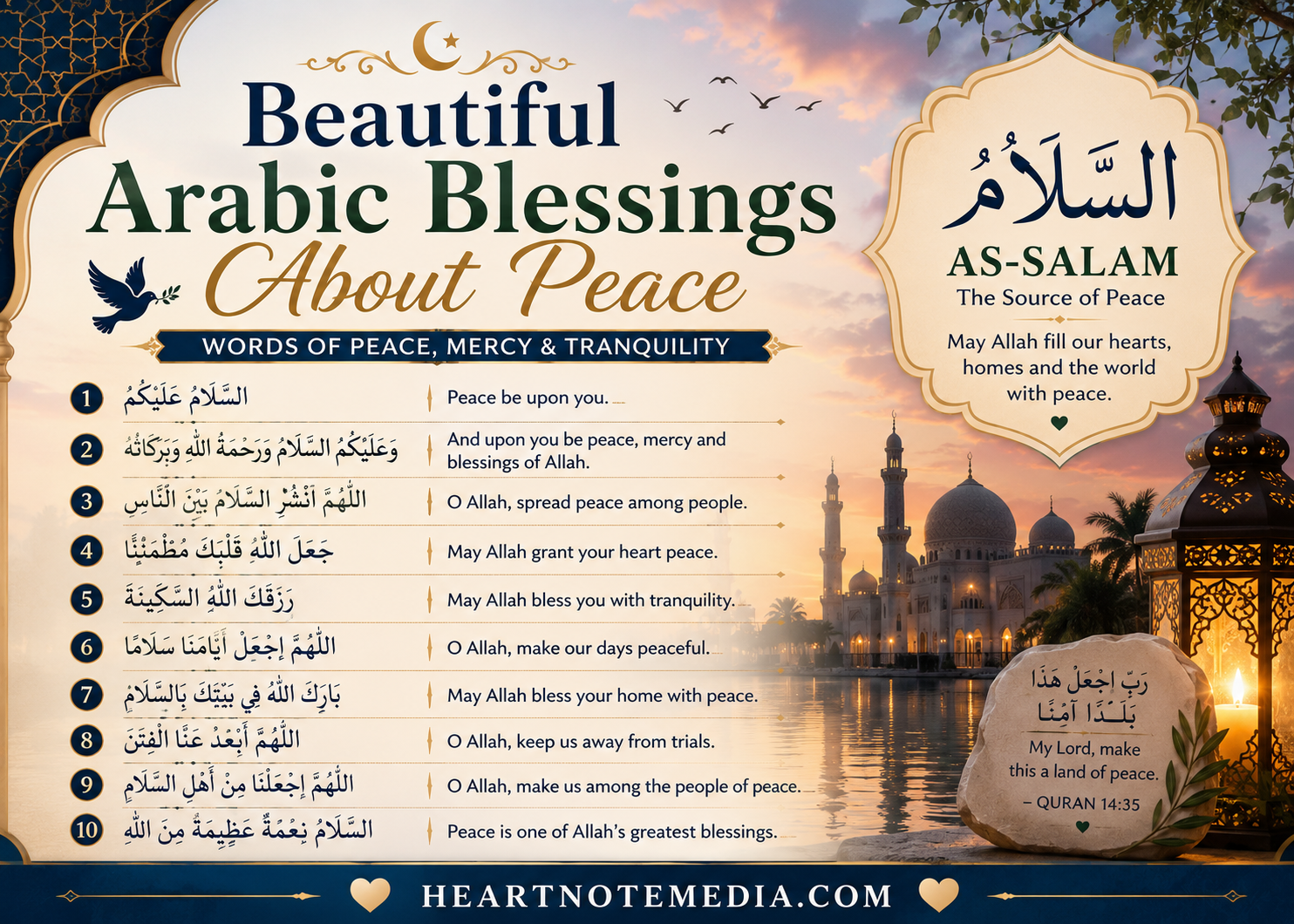
Beautiful Arabic Blessings About Peace
Peace is one of the greatest blessings in Islam. These phrases reflect calmness, mercy, and security.
- السلام عليكم — Peace be upon you.
- وعليكم السلام ورحمة الله وبركاته — And upon you be peace, mercy, and blessings of Allah.
- اللهم انشر السلام بين الناس — O Allah, spread peace among people.
- جعل الله قلبك مطمئنًا — May Allah grant your heart peace.
- رزقك الله السكينة — May Allah bless you with tranquility.
- اللهم اجعل أيامنا سلامًا — O Allah, make our days peaceful.
- بارك الله في بيتك بالسلام — May Allah bless your home with peace.
- اللهم أبعد عنا الفتن — O Allah, keep us away from trials.
- اللهم اجعلنا من أهل السلام — O Allah, make us among the people of peace.
- السلام نعمة عظيمة من الله — Peace is one of Allah’s greatest blessings.
Arabic Blessings for Protection
Protection prayers are commonly recited before travel, sleep, work, and important events.
- حفظك الله — May Allah protect you.
- اللهم احفظني وأهلي — O Allah, protect me and my family.
- اللهم احرسنا بعينك التي لا تنام — O Allah, guard us with Your ever-watchful eye.
- أعاذك الله من كل سوء — May Allah protect you from every harm.
- اللهم احفظ بلادنا — O Allah, protect our country.
- اللهم اكفنا شر الأعداء — O Allah, protect us from enemies.
- اللهم اجعلنا في حفظك — O Allah, keep us under Your protection.
- اللهم احفظ أولادنا — O Allah, protect our children.
- اللهم احفظ المسلمين — O Allah, protect all Muslims.
- حسبنا الله ونعم الوكيل — Allah is sufficient for us, and He is the best disposer of affairs.
Common Mistakes When Using Arabic Blessings
Many beginners learn translations but miss the cultural context. Avoid these common mistakes:
- Using Allahumma Barik as a casual greeting instead of a prayer of blessing.
- Confusing Barakah (blessing) with Dua (supplication). A Dua is a prayer, while Barakah refers to the blessing itself.
- Forgetting pronunciation. Even simple phrases become easier to understand with practice.
- Using formal religious phrases in situations where a simple greeting is more natural.
- Assuming every Arabic-speaking country uses identical expressions. Some regional variations exist while the core meanings remain the same.
Why People Love Arabic Blessings
Arabic blessings continue to inspire millions because they combine beautiful language with sincere prayers. Every phrase carries hope, gratitude, mercy, and trust in Allah. Instead of simply wishing someone “good luck,” these expressions ask for lasting goodness, guidance, protection, and Barakah that benefits every aspect of life.
Whether spoken between family members, friends, neighbors, or strangers, Arabic blessings strengthen relationships and remind believers that every blessing ultimately comes from Allah.
Suggested Internal Links
- Good Morning Blessings
- Good Night Blessings
- Islamic Birthday Wishes
- Friday Blessings
- Sunday Blessings
Frequently Asked Questions About Blessings Arabic
1. What is the Arabic word for blessing?
The most common Arabic word for blessing is Barakah (بَرَكَة). It means divine blessing, abundance, prosperity, and lasting goodness granted by Allah. The word is widely used in the Quran, Islamic teachings, and everyday Arabic conversations.
2. How do you say God bless you in Arabic?
The most common expression is بارك الله فيك (Barakallahu Feek), which means “May Allah bless you.” When speaking to a group, people often say بارك الله فيكم (Barakallahu Feekum).
3. What does Barakah mean?
Barakah refers to Allah’s divine favor that brings continuous goodness. It is not limited to wealth but also includes health, knowledge, family, peace, time, happiness, and success.
4. What is Allahumma Barik?
اللهم بارك (Allahumma Barik) means “O Allah, bless it” or “O Allah, bless them.” Muslims commonly say this when admiring someone’s home, child, achievement, or possessions while asking Allah to protect them from envy.
5. Is Barakah mentioned in the Quran?
Yes. The concept of Barakah appears in multiple Quranic verses, describing Allah’s blessings upon people, places, and creation. It represents abundant goodness, mercy, and divine favor.
6. What is the difference between Barakah and Dua?
A Dua is a personal supplication or prayer made to Allah. Barakah is the blessing or goodness that Allah grants in response to His wisdom and mercy. Muslims often make Dua asking Allah for Barakah in their lives.
7. Can non-Arabic speakers use Arabic blessings?
Absolutely. Millions of Muslims around the world use Arabic blessings regardless of their native language. Learning a few common phrases helps you communicate respectfully and understand Islamic culture more deeply.
8. Which Arabic blessing is used every day?
Some of the most commonly used daily blessings include:
- Barakallahu Feek — May Allah bless you.
- Allahumma Barik — O Allah, bless it.
- JazakAllahu Khairan — May Allah reward you with goodness.
- Hafizak Allah — May Allah protect you.
- Waffaqak Allah — May Allah grant you success.
9. How do Muslims bless someone after sneezing?
The traditional response is رحمك الله (Rahimak Allah), meaning “May Allah have mercy on you.” The person who sneezed then replies with another traditional phrase asking Allah to guide and bless everyone.
10. Why are Arabic blessings important?
Arabic blessings remind believers that every success, opportunity, and moment of happiness comes from Allah. They encourage gratitude, strengthen relationships, spread kindness, and keep faith at the center of daily life.
(Blessings ArabicBlessings ArabicBlessings ArabicBlessings ArabicBlessings ArabicBlessings ArabicBlessings ArabicBlessings ArabicBlessings ArabicBlessings ArabicBlessings ArabicBlessings ArabicBlessings ArabicBlessings ArabicBlessings ArabicBlessings ArabicBlessings ArabicBlessings ArabicBlessings Arabic)
Final Thoughts
The beauty of blessings arabic lies in their simplicity and depth. A few heartfelt words can become sincere prayers for protection, mercy, guidance, happiness, and lasting Barakah. Whether you are learning Arabic, strengthening your Islamic knowledge, or simply looking for meaningful phrases to share with loved ones, these timeless expressions carry hope and positivity for every stage of life.
From Barakallahu Feek and Allahumma Barik to prayers for family, success, peace, and protection, Arabic blessings continue to inspire millions of people across the world. Use them with sincerity, understand their meanings, and let them become a beautiful part of your daily conversations.
Key Takeaways
- Barakah (بَرَكَة) means divine blessing, abundance, and lasting goodness.
- Barakallahu Feek is the most common way to say “May Allah bless you.”
- Allahumma Barik is used when admiring someone or asking Allah to bless them.
- Arabic blessings are used for family, friends, work, travel, weddings, birthdays, and daily life.
- These expressions reflect gratitude, kindness, mercy, and trust in Allah.
- Learning Arabic blessings helps you understand Islamic culture and communicate with confidence.
- Even beginners can start using these phrases naturally in everyday conversations.